On a busy Monday at 6 p.m., a fitness center’s HVAC system is doing interval training it never signed up for. The treadmills are full, the spin studio is humid enough to grow basil, and the free-weight area smells like ambition and neoprene. Behind the scenes, ducts pull thousands of cubic feet of air every minute through a maze of metal that collects dust, lint, chalk, shed skin, rubber particles, and the occasional protein bar wrapper that got ambitious. When the lungs of the building get congested, everyone notices. The air feels thick. The AC sounds like it’s in a losing arm wrestle. Members ask if something is “off.”
Commercial duct cleaning is not glamorous, but in gyms and fitness centers it quietly supports comfort, energy efficiency, and member retention. I have watched a 30,000 square foot club go from muggy and odor-prone to crisp and steady after a thorough clean paired with sensible filter upgrades. No neon signs, just better breathing and fewer staff headaches.
Why gym HVAC gets dirty faster than office HVAC
Fitness facilities are high-load spaces. Occupancy spikes, equipment runs hot, and the air carries fine debris that most commercial buildings never see. Think about what circulates in a weight room compared to a law office. You have:
- Chalk and magnesium carbonate from Olympic lifting and bouldering areas, which breaks down into tiny particles that laugh at cheap filters. Fine rubber dust from mats and crumb rubber flooring, especially in deadlift zones. Lint and fiber from towels, hoodies, and laundry, boosted by dryers venting in the same building envelope. Aerosolized sweat and body oils that hitch a ride on dust, then settle on coil fins like a film no one asked for. Disinfectant overspray. If your staff is enthusiastic with sprayers, atomized chemical residue will eventually find a coil to befriend.
Most facilities also push the equipment hard. Supply and return fans cycle constantly during peak hours. Return paths in gyms are often open plenum designs that treat the ceiling space like a highway for particles. That might save on sheet metal cost, but it gives lint and dust more real estate to occupy.
The anatomy of a gym’s air path and where it clogs
Follow the air. It enters through outdoor air dampers, mixes with return air, crosses filters and coils, then moves through supply ducts to diffusers. It comes back through returns, past grilles that collect the same gray fluff you see under a bed, and returns to the air handler. Problem points, in rough order of how often they bite:
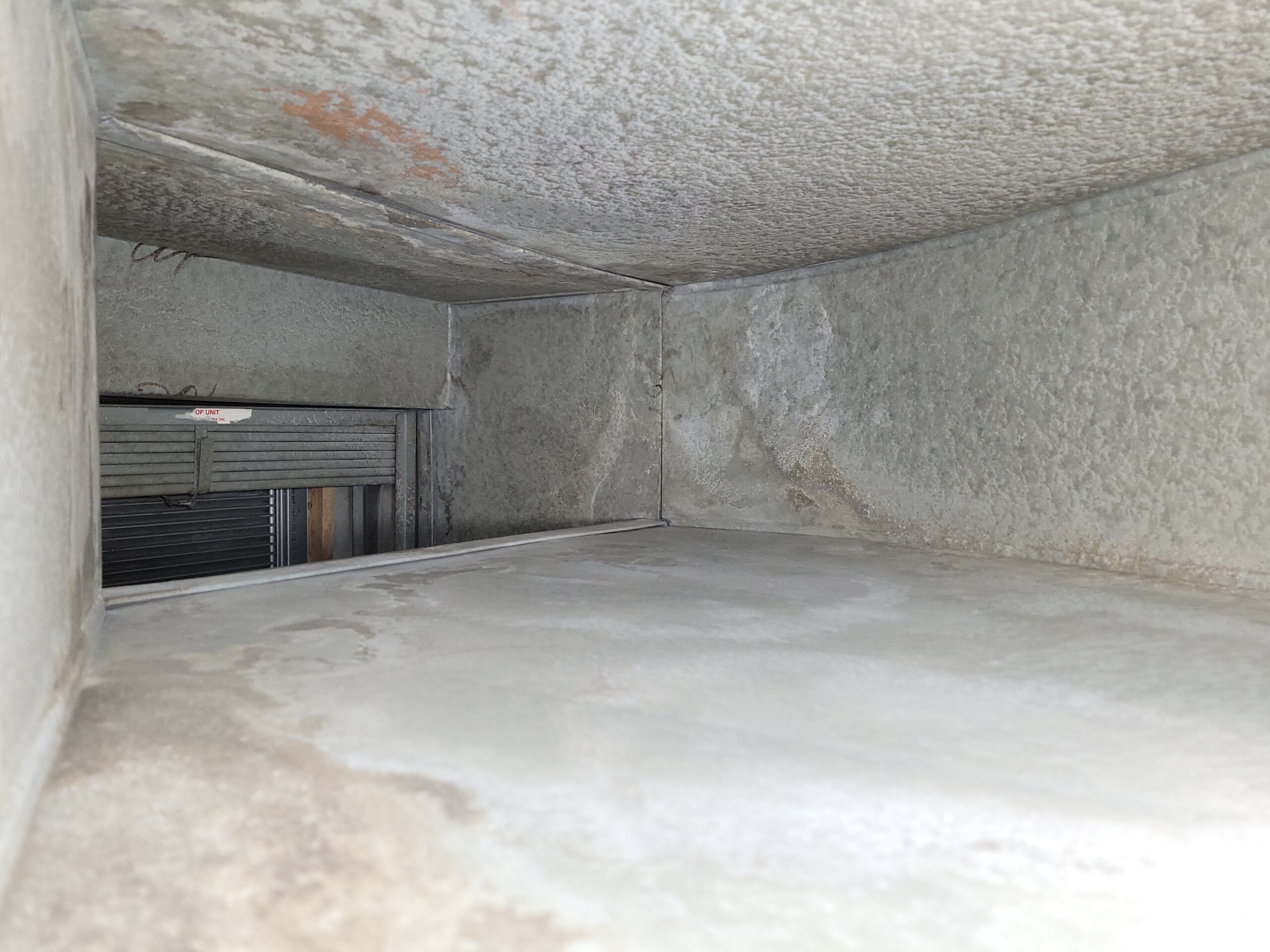
Return grilles and necks. They load up first, especially near turf or chalky platforms. You can see this with a flashlight and a step stool. If they look like a lint sweater, the upstream ducts probably do too. Filter racks and frames. Poorly sealed racks allow bypass, sending unfiltered air straight to coils. I once found daylight around a filter bank you could slip a pencil through. The coil looked like felt. Coils and drain pans. A dirty coil does not just reduce airflow, it grows pressure drop and invites microbial film. That means fans work harder, energy bills drift up, and the building dehumidifies less effectively. Branch ducts feeding studios. Spin rooms and hot yoga spaces carry higher moisture and aerosolized salts from sweat. You will often see more buildup on those takeoffs. Dryer exhaust and locker room exhaust. Not strictly part of supply or return air, but the lint and humidity that leak from these systems find their way into the return path. If your dryers vent 20 feet across a plenum with a sagging flex line, you are halfway to a fire inspector’s lecture.Health, odors, and the very human side of air
A gym’s air quality lives or dies by perception. Members will forgive an out-of-order rowing machine faster than they will forgive stale, humid air. Odors are chemistry made social. Sweat itself is mostly water and salt; the smell people call “gym” often comes from skin bacteria metabolizing residual sweat on fabrics and surfaces. Those compounds travel on dust and moisture. When ducts are dirty and coils are slimed, the system recirculates that signature scent.
Cleaning the ducts and adjacent components does two things members notice. First, it reduces the reservoir of gunk that can break free and get distributed. Second, it restores proper airflow and heat exchange, so you pull humidity down faster during peak classes, which nips odor at the source. I have seen relative humidity drop from mid 60s to high 40s after coil restoration and duct cleaning, with no change to setpoints. People stopped describing the studio as “soupy.” They stopped propping open the emergency exit for “fresh air,” too.
On the respiratory side, cleaning is not a medical intervention. It is a housekeeping one. The goal is to control sources and transport of common particulates, maintain design airflow, and keep surfaces free of the grime that loves moisture. That is a defensible, practical aim, and it works.
The money side: energy and equipment wear
Dirty airways turn a sprint into a slog for your fans and compressors. Measure it rather than guessing. A coil that has loaded with dust and website biofilm can add 0.3 to 0.6 inches of water column to static pressure. Fans compensate by spinning faster or they simply move less air, which stretches run times, increases cycling, and erodes dehumidification. I have documented cases where cleaning and sealing filter racks, then restoring the coil and nearest ducts, cut fan energy by a noticeable chunk. If you want a number, expect rough energy savings in the single digits to low double digits, say 5 to 15 percent, when a badly fouled system returns to spec. If your system is already tidy and well balanced, you will see less. If it is a dust bunny terrarium, you will see more.
Beyond energy, compressors and heat pumps love stable airflow. When coils can exchange heat properly, refrigerant pressures stay in their design lanes. That means fewer nuisance trips and better longevity. On paper, most air handlers die from age. In reality, a lot die from chronic neglect disguised as normal wear.
What “commercial duct cleaning” covers in a gym
The phrase commercial duct cleaning can be a catch-all. In a gym, a useful scope addresses the surfaces and components that meaningfully affect airflow and cleanliness. A quality provider will start with a site survey, then propose a plan that usually includes:
- Return and supply duct interiors accessible from service openings, cleaned with negative air and mechanical agitation. Diffusers, grilles, and registers removed, washed, and reinstalled. If they look yellowed or corroded, budget for replacements instead. Air handling units opened, insulated surfaces vacuumed, filter racks sealed where needed, coils cleaned with methods appropriate to the fin density and metallurgy. Good techs treat coils like radiators, not like car mats. VAV boxes or zone dampers inspected and cleaned where debris could impede movement. This is often skipped because it takes patience. Verification. Photos and short videos make it easier to understand what changed. Nobody wants to take someone’s word for it when the system is hidden.
Some firms propose fogging biocides or applying sealants. Use judgment. If you have a documented microbial growth issue on porous insulation, replacement or encapsulation can be appropriate. If you do not, skip the “fresh scent” sales pitch. Scented coatings can cause more member complaints than they solve.
How often to clean in a fitness environment
There is no one-size schedule. Frequency depends on use, housekeeping, filtration, and outdoor air quality. General patterns:
- Heavy-use clubs with chalk and turf: inspect quarterly, clean key sections every 12 to 18 months. Spin studios and hot yoga connected to the same system: expect more frequent attention around those branches and the air handler that serves them. Facilities with pools: natatorium ventilation is its own animal. For the rest of the building, the high humidity and chloramine drift can accelerate grime on returns near the pool corridor. Inspect more often, but make sure you are not confusing corrosion with dirt. Boutique studios with low occupancy: a two to three year interval can be fine if filters are solid and housekeeping is disciplined.
Think of cleaning as part of a loop with filtration and sealing. If filters are upgraded from a limp MERV 8 to a stout MERV 13, and racks are sealed so air cannot cheat around them, you extend the time between deep cleans and improve day-to-day air quality.
A small story from the field
A CrossFit box in a converted warehouse called because the AC could not keep up after 4 p.m. Classes were packed, chalk was generous, and towels were everywhere. The return grilles were furry. Static pressure across the coil measured high, and the space humidity sat at 62 percent despite a 72 degree setpoint. We sealed gaps around the filter rack with gasket and clips, replaced filters with MERV 13 that actually fit, cleaned the return trunk that ran above the rig, and restored the coil. Two days later, with similar occupancy, humidity held at 48 to 50 percent and the AC cycled instead of running continuously. Nobody noticed the ducts. They noticed the sweat didn’t hang in the air.
What to do before you hire a duct cleaner
You can do small things that improve results and sometimes reveal that what you needed was not just duct cleaning. Here is a short, practical pre-hire checklist:
- Take photos of the dirtiest return grilles and the nearest upstream duct interior. If you cannot see inside, remove one grille and check the boot or neck with a flashlight. Check filters for fit and bypass. If you can slide a finger between the filter edge and the rack frame, air is going around, not through. Log a week of temperature and humidity in the worst room during peak use. A cheap data logger will do. Bring that data to the conversation. Put manometer ports on each side of your main coil, if they do not exist, and measure pressure drop across clean filters. This number becomes your baseline. Verify dryer exhaust and locker room exhaust are moving what they should. Dryer lint that escapes is a lint party for your returns.
The cleaning day: what it looks like and what it sounds like
Expect noisy vacuums and polite chaos. Good vendors schedule around your operations and bring enough negative air machines to keep particulates under control. They set up containment at the air handler and service openings in ducts, then use rotary brushes, whips, or compressed air tools to dislodge debris while the machines pull it out through HEPA filtration. They remove diffusers and grilles, bag them for cleaning, and keep fasteners in labeled containers so nothing goes missing.
Noise peaks when they agitate large trunks. If you operate 24 hours, aim for the slowest window or target zones in phases. When the work includes coil cleaning, they isolate and protect electrical components and use detergents that match coil material. Acid on microchannel aluminum is a bad day. Rinse water management matters too. You do not want that cocktail in your ceiling tiles.
If a provider suggests fogging fragrance at the end to “freshen the air,” ask for the Safety Data Sheet and think about member sensitivity. Unscented, low residue is your friend.
Choosing a vendor without playing roulette
It is not enough for a company to own a vacuum truck. Look for proof that they understand HVAC systems in fitness settings. The best pitch decks show pressure readings, coil fin photos, and how they protect sensitive equipment. Ask them to map the scope on your floor plan. The ones who thrive in gyms talk through after-hours constraints, how they will treat the spin studio mirrors and sound equipment, and how they will coordinate with your building automation team.
Credentials help but do not replace judgment. Industry associations set helpful standards for cleaning methodology and access opening placement. More important is a vendor’s willingness to measure before and after. Airflow readings at a few key diffusers, pressure drop across the coil, photos of the return plenum, and recorded notes on filter fit beat vague claims every time.
Special zones inside a gym that need a closer look
Not all rooms load your ducts equally. A hot yoga studio that runs at 100 degrees is going to aerosolize oils and sweat at a different rate. Spin rooms act like little steam engines with salt spray. A turf field sheds fibers that cling to diffuser vanes. Climbing walls generate chalk storms that drift into high returns. A kids’ club has glitter and craft debris that makes a mess out of linear bar grilles. If your juice bar blends protein shakes, you get a sticky sweetness that settles on surfaces near returns. Each of these spaces benefits from targeted return grille cleaning and, occasionally, installing local filtration at the room level to catch the worst of it before it heads into the main ductwork.
Sanitizers, sealants, and the line between helpful and hype
Disinfectants and encapsulants can be appropriate, but not as a default. If your internal duct liner is sound, dry, and just dusty, mechanical cleaning followed by good filtration is the clean answer. If insulation is degraded or stained, you have decisions. Remove and replace sections, or encapsulate with a low-VOC coating that locks fibers down. The first produces a cleaner result but costs more. The second is faster and less disruptive, with the trade-off that you are covering a problem, not removing it. Choose based on budget, access, and how long you plan to keep the system.
Biocides deserve caution. Without active moisture, they do little besides adding chemicals to surfaces. If there is moisture, the fix is to stop the moisture first. Fogging a damp duct is like spraying perfume on a wet dog. It changes the story for a day, not the plot.
Costs that actually help you plan
Pricing varies by region, access, complexity, after-hours premium, and scope. Useful starting points:
- Wide ranges for commercial duct cleaning run from the low tens of cents to around a dollar per square foot of conditioned space when access is straightforward. Expect the higher end if you have lots of small branches, high ladders, or tough containment. Some vendors price by component or by linear foot of duct and number of registers. That often lands in the hundreds per air handler for small systems, into the thousands for large multi-zone handlers serving big clubs. Coil restoration is typically separate. For a medium coil, cleaning can range from a few hundred to a couple thousand dollars depending on condition and access. After-hours or weekend work adds a premium, commonly 10 to 30 percent. It is usually worth it to avoid upsetting members.
Get at least two quotes that specify which ducts, which air handlers, which accessories, and what verification you will receive. Vague scope equals surprise invoices.
Member communication that prevents rumor spirals
People notice when a ceiling tile is open and a hose snakes out. They photograph it, post it, and ask if the air is “toxic.” You can steer the narrative with straight talk. A week before work, post signs or app notices that your facility is doing routine HVAC hygiene to keep the air comfortable and the equipment efficient. Emphasize that work happens off hours and that dust control is part of the plan. If there will be a temporary scent from a cleaner near the air handler, say so, and choose unscented whenever possible. Your front desk staff should know the simple talking points, not be left shrugging.
A simple plan you can run every year
Use this short annual rhythm to keep ducts from becoming a saga:
- In the quiet season, schedule a coil and duct inspection with photos and pressure readings. Use this to decide if cleaning is due. Seal filter racks and upgrade filters if your units can handle the pressure. Track pressure drop so you do not trade cleanliness for starved airflow. Target the worst-return branches for interim cleaning if the whole system is not due. Studios and turf zones typically need it first. Budget for at least one significant cleaning cycle every one to two years for heavy-use facilities, and tie it to your busiest calendar so you can schedule after hours. Record before and after data. The next year’s decisions get easier when you can see trends.
What you should not DIY
Wiping grilles and replacing filters are fair game for your maintenance team. Taking apart air handlers, opening duct access doors, and running mechanical agitation inside ducts are not. The tools create forces that can rip liner, damage duct seams, or blow debris into sensitive spaces if not managed under proper negative pressure. I have walked into a club where a well-meaning manager asked a handyman to “vacuum the vents.” The result was chalk redistributed like powdered sugar across a cycling studio. Members were not amused.
That said, a few DIY touches between professional service visits pay off. Keep a soft brush and a vacuum with a HEPA head on your cleaning cart. Hit return grilles in chalk-heavy zones weekly. Replace filters on a schedule driven by measured pressure drop, not just months. Teach staff to notice the difference between a dirty grille and a grille sweating from humidity, which points to a different problem entirely.
Measurement makes you look smart because it is
You do not need a lab to tell if cleaning helped. A handful of straightforward readings will backup the spend:
- Pressure drop across the coil before and after. Lower is generally better, within design flow. Average temperature split across the coil at steady state, which tells you if heat exchange improved. Relative humidity in your toughest rooms during peak class times across a week. Look for fewer spikes above 55 percent. Qualitative feedback. Track member comments about “air” or “smell” in your CRM. It sounds soft until it trends the right way.
Particle counters are a fun toy, but numbers can jump around with occupancy and cleaning schedules. If you use one, measure consistently at the same time of day and location.
Edge cases to respect
Some spaces need different treatment. A natatorium eats metal for breakfast. Corrosion, not dust, is the threat, and specialists should be involved. Boxing gyms use rosin and resin that cling to everything. Aerial yoga rigs shed fibers from fabrics, which pile inside linear slot diffusers. Powerlifting meets bring chalk storms that should have temporary returns covered with custom pre-filters. If your facility hosts events like those, plan an extra cleaning pass for returns after the event. It is cheaper than pretending the blizzard never happened.
The quiet win you notice when nobody notices
When commercial duct cleaning is done well in a gym, the best compliment is silence. The space does not smell like last night’s spin class at 6 a.m. Humidity does not hang. The fans do not scream. The thermostat setpoint stops feeling aspirational. Members stick around a little longer, and staff do not wage war with air fresheners. Pair that with right-sized filtration, sealed racks, and a modest measurement habit, and your ducts will support the business instead of starring in complaints.
Clean ducts do not sell memberships by themselves. They keep you from losing them. In a business built on people showing up and breathing hard, that is a very good return.